

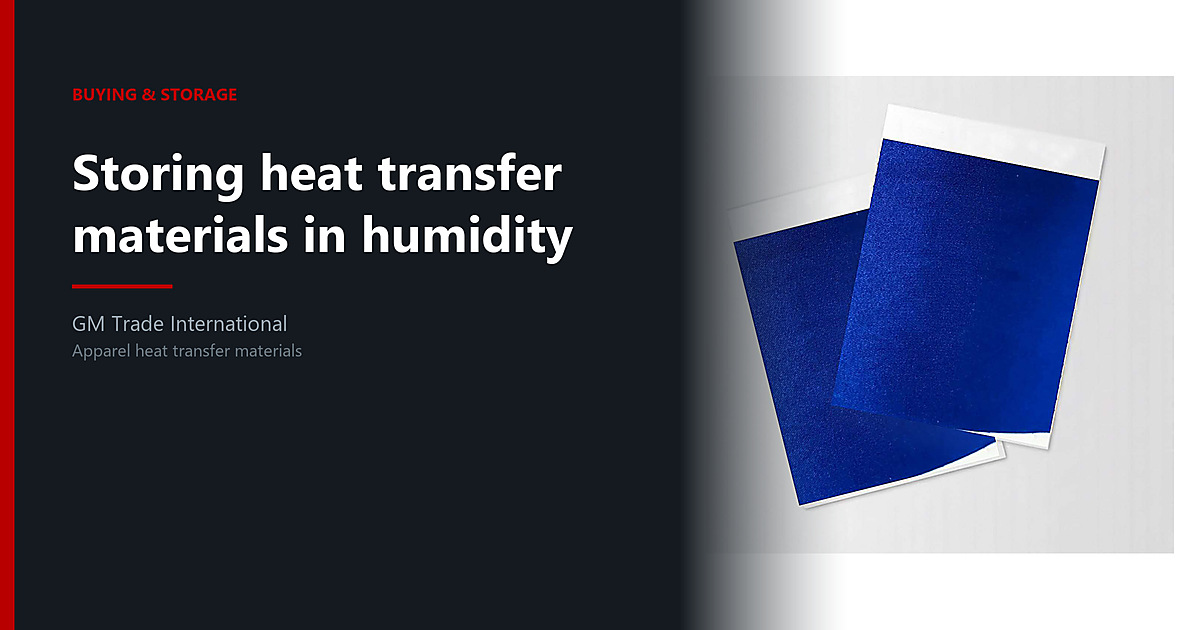
Storing heat transfer materials in Bangladesh's humidity
Heat and moisture degrade transfer materials before they ever reach the press. What that costs, and what storage practice avoids it.
Most guidance on heat transfer materials is written for temperate climates and quietly assumes a dry, air-conditioned store room. Bangladesh is warm and humid for much of the year, and that has real consequences for material sitting in stock.
What humidity does
The adhesive layer on transfer materials is the vulnerable part. Absorbed moisture can interfere with how that adhesive melts and bonds, producing weak adhesion or patchy transfer even when press settings are correct. On printed films, moisture can also affect how ink and adhesive powder behave.
The failure is frustrating precisely because nothing looks wrong. The roll appears fine, the press is set correctly, and the transfer still lifts at the edges after washing.
What heat does
Sustained warmth accelerates ageing in the adhesive and, in rolled material, encourages layers to stick to one another. A roll stored against a hot wall or under a metal roof can be measurably worse than the same roll stored a few metres away.
Practical storage
• Store rolls upright, not lying flat and not stacked under weight. Pressure marks transfer into the material and show up on the garment.
• Keep material off the floor and away from exterior walls, where ground moisture and radiated heat are worst.
• Away from direct sunlight, and away from anything that heats up — presses, dryers, windows.
• Keep original packaging on until the material is needed. It is a moisture barrier as much as protection from handling.
• Reseal opened stock, particularly DTF film and anything with an exposed adhesive face.
• Rotate stock — oldest first. Adhesives have a working life; manufacturers who publish one commonly quote around a year from manufacture in suitable conditions.
Before pressing after long storage
If material has been in stock for a long time, or through a full monsoon, test a piece before running it in production rather than assuming it performs as it did when it arrived. This costs one garment and a few minutes.
A note on buying
Storage conditions are one reason to think about order size honestly. Buying a year’s material at once looks efficient on unit price, but if the last quarter of it has degraded in a warm store room the saving is illusory. Ordering in line with what you will actually consume, from stock held locally, is usually the cheaper answer.
Random Posts
A short, repeatable test procedure that catches the failures which otherwise only appear after a few hundred garments have been decorated.
Read More
Edges lifting, cracking, press marks, dull patches, colour bleed and residue — what each symptom typically points to.
Read More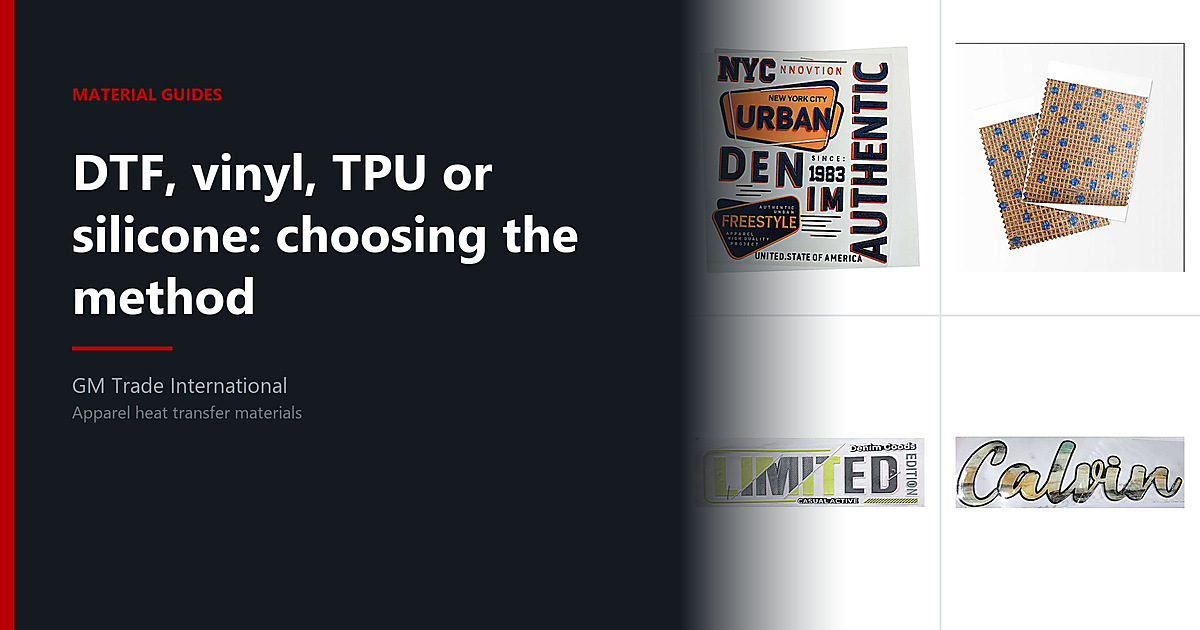
Four ways to decorate a garment, and an honest account of what each is good at, what it costs you in setup, and where each one falls down.
Read More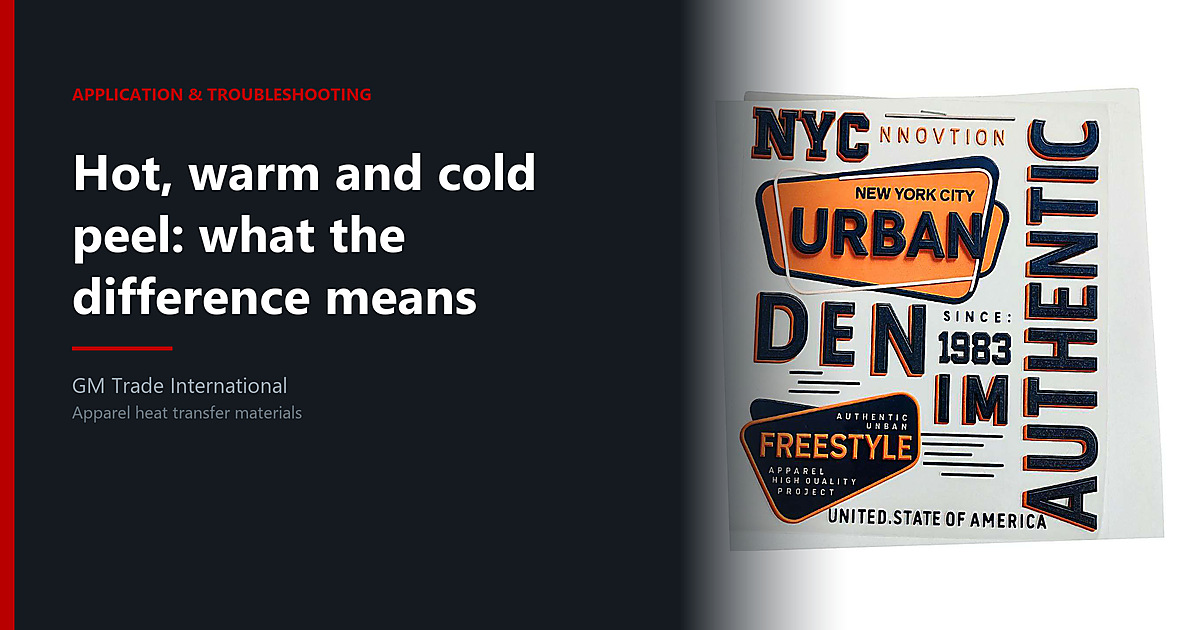
Peel type is the single most commonly ignored instruction in heat transfer work, and getting it wrong ruins the garment rather than just the print.
Read More
A plain-language guide to the main heat transfer vinyl finishes, what each one looks and feels like on a garment, and where each is normally used.
Read More