

Six common heat transfer defects and what usually causes them
Edges lifting, cracking, press marks, dull patches, colour bleed and residue — what each symptom typically points to.
This is a symptom-first guide. Find what you are seeing, then work through the likely causes in the order given — they are ordered by how often each turns out to be the culprit.
1. The edges lift after washing
Most often incomplete bonding rather than a faulty material. Check pressure first: it is the setting most often wrong, and an unevenly closing press gives good adhesion in the centre and poor adhesion at one edge. Then check dwell time and temperature against the data sheet. Also consider the fabric — water-repellent and softener-treated cloth resists adhesion, and needs a material made for it.
2. The design cracks when the garment is stretched
Usually a mismatch between material and fabric: a rigid material on a stretch garment will crack whatever the press settings. It can also come from overheating, which makes some materials brittle. Check the material is specified for stretch fabric before adjusting anything else.
3. A shiny rectangle around the design
A press mark, caused by the platen flattening the fabric fibres around the transfer. More common on polyester and on darker fabrics. Reducing pressure and dwell within the permitted range helps; a cover sheet between platen and garment helps more. Pressing the garment briefly before applying the transfer, so any mark is uniform, also reduces how visible it is.
4. Dull or patchy areas across the design
Usually uneven pressure across the platen, especially over seams, zips and pockets, which lift the fabric and reduce contact elsewhere. A pressing pillow under the garment restores even contact. If the patchiness is consistent in the same place across many garments, the press itself is likely uneven and needs checking.
5. Colour from the garment appearing in the design
Dye migration — dye from the fabric moving into the transfer under heat, most commonly on polyester and most visible on white or light designs over dark cloth. It often appears hours or days after pressing, not immediately. The fix is a material with a dye-blocking construction, or a lower application temperature if the material allows it.
6. Adhesive residue left on the garment
Typically peeling at the wrong moment — most often peeling a cold-peel material while it is still hot, so the adhesive lets go of the design instead of the carrier. Confirm the peel method for the specific material. It can also come from excessive heat causing adhesive to squeeze out beyond the design edge.
When to stop adjusting and ask
If you have checked pressure, temperature, time and peel method against the data sheet and the defect persists, stop changing settings. Repeated adjustment without a record makes the problem harder to diagnose. Note what you have tried, keep a failed sample, and contact your supplier — a batch issue or a material-fabric mismatch cannot be pressed away.
Random Posts
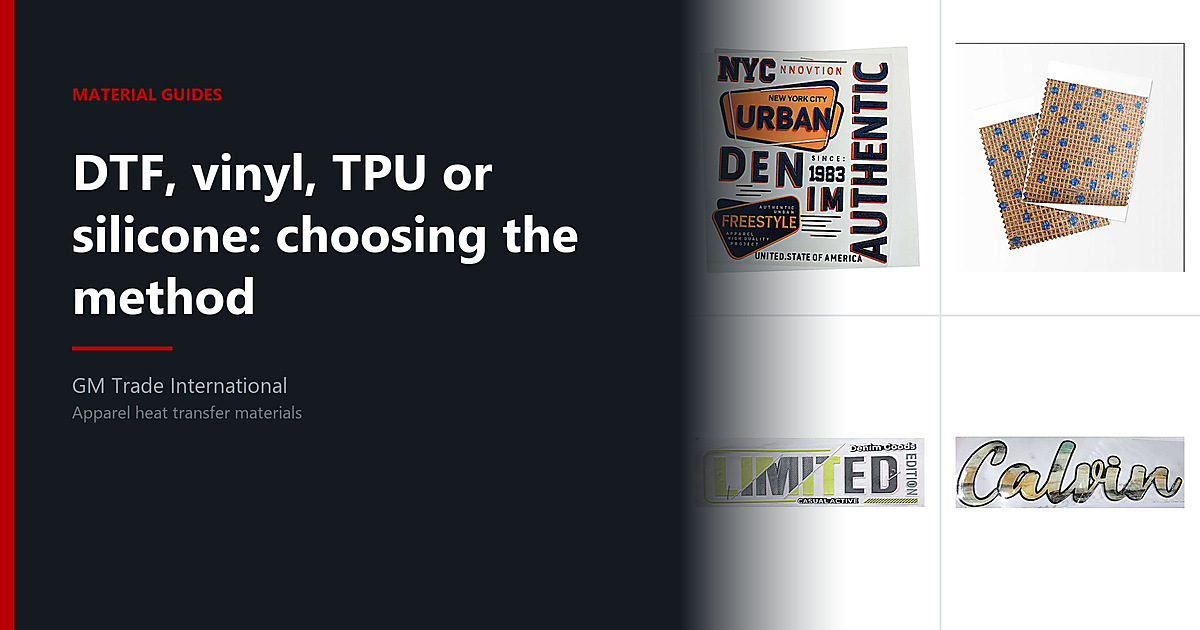
Four ways to decorate a garment, and an honest account of what each is good at, what it costs you in setup, and where each one falls down.
Read More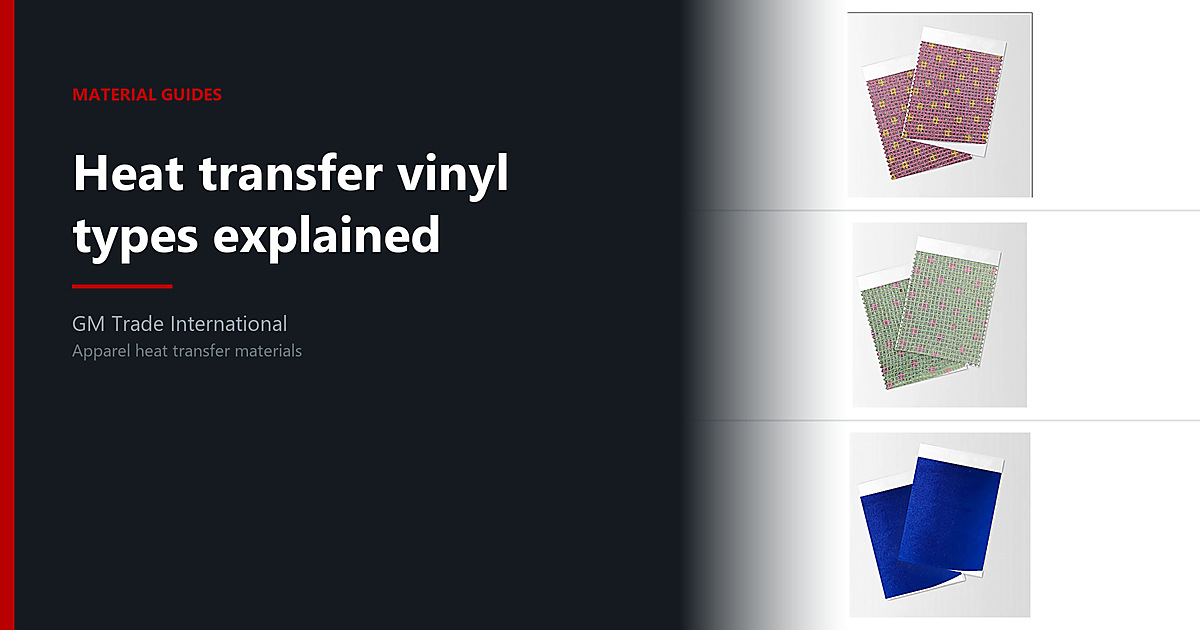
A plain-language guide to the main heat transfer vinyl finishes, what each one looks and feels like on a garment, and where each is normally used.
Read More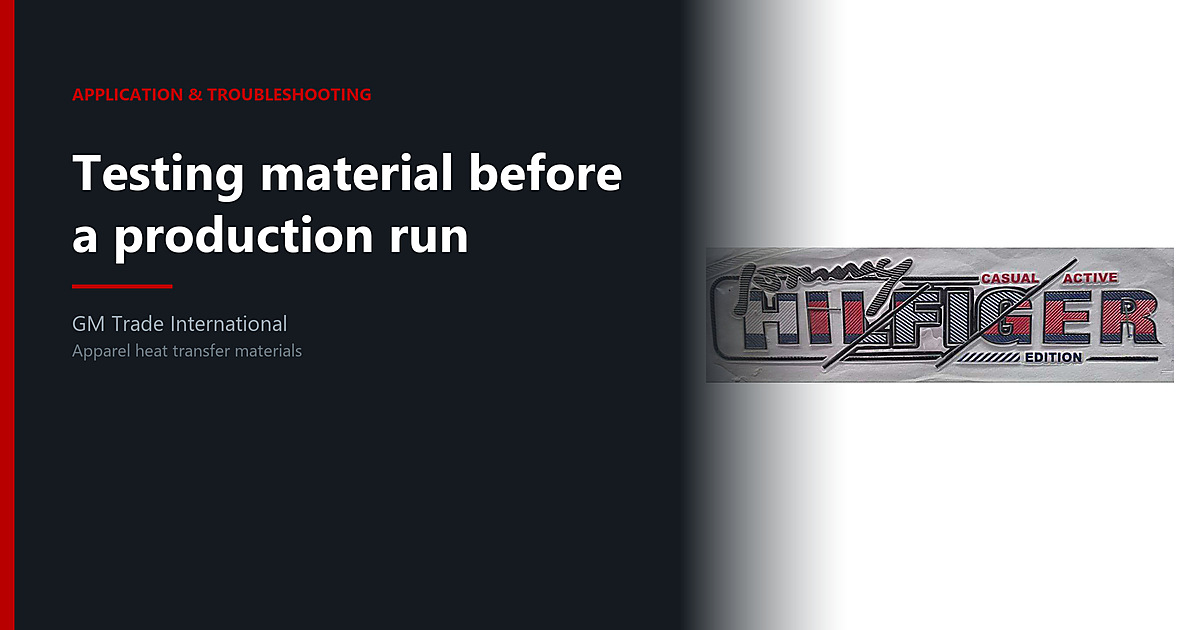
A short, repeatable test procedure that catches the failures which otherwise only appear after a few hundred garments have been decorated.
Read More
Heat and moisture degrade transfer materials before they ever reach the press. What that costs, and what storage practice avoids it.
Read More
Peel type is the single most commonly ignored instruction in heat transfer work, and getting it wrong ruins the garment rather than just the print.
Read More